

What is the wind resistance of a high - speed rolling door?
As a supplier of high - speed rolling doors, I often encounter customers who are curious about the wind resistance of these doors. Wind resistance is a crucial factor, especially for applications in areas prone to strong winds, such as coastal regions, large industrial warehouses, and factories. In this blog, I'll delve into the concept of wind resistance in high - speed rolling doors, how it's measured, and the factors that influence it.
Understanding Wind Resistance
Wind resistance refers to the ability of a high - speed rolling door to withstand the forces exerted by the wind without being damaged or malfunctioning. When wind blows against a door, it creates pressure differentials on both sides of the door. The greater the wind speed, the higher the pressure, and if the door cannot handle this pressure, it may warp, break, or fail to operate properly.

To quantify wind resistance, we typically use a unit called Pascals (Pa). The wind pressure exerted on a surface can be calculated using the formula (P = 0.5\times\rho\times V^{2}), where (P) is the wind pressure, (\rho) is the air density (usually around 1.225 (kg/m^{3}) at sea - level and 15°C), and (V) is the wind speed in meters per second. For example, at a wind speed of 20 m/s, the wind pressure is approximately (0.5\times1.225\times20^{2}= 245) Pa.
Measuring Wind Resistance of High - Speed Rolling Doors
The wind resistance of high - speed rolling doors is usually determined through standardized testing. These tests are conducted in specialized laboratories where the door is subjected to simulated wind conditions. The door is installed in a test frame, and fans are used to generate different wind speeds and directions.
During the test, the door's performance is closely monitored. The test measures whether the door can maintain its structural integrity, operate smoothly, and seal properly under the applied wind pressure. The results are then classified into different wind resistance ratings. For instance, a door with a high wind resistance rating can withstand stronger winds compared to a door with a lower rating.
Factors Influencing Wind Resistance
- Door Material
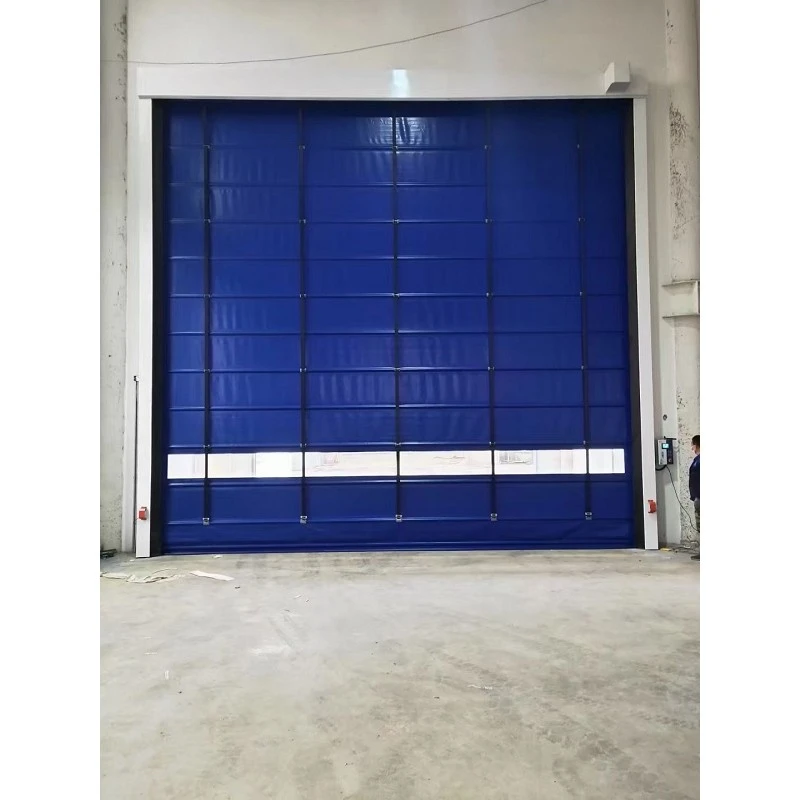
The material of the high - speed rolling door plays a significant role in its wind resistance. For example, Fabric High Speed Door are often made of strong, tear - resistant fabrics. These fabrics can flex slightly under wind pressure, absorbing some of the energy and reducing the risk of damage. However, they may not be as effective as metal doors in extremely high - wind situations.
On the other hand, metal high - speed rolling doors, such as those made of aluminum or steel, offer greater rigidity and strength. They can better withstand high wind pressures without significant deformation. The thickness and quality of the metal also affect the wind resistance. Thicker metal panels generally provide better protection against wind forces.
2. Door Design
The design of the high - speed rolling door is another important factor. A well - designed door will have features that enhance its wind resistance. For example, some doors are equipped with reinforced guide rails. These guide rails help keep the door in place during high - wind events, preventing it from being pushed out of alignment.
The shape of the door can also impact its wind resistance. Doors with aerodynamic shapes can reduce wind drag, which in turn reduces the pressure exerted on the door. Additionally, the way the door is installed, including the tightness of the seals and the strength of the mounting hardware, can affect its ability to withstand wind.
3. Installation Quality
Proper installation is crucial for ensuring the wind resistance of a high - speed rolling door. If the door is not installed correctly, it may not be able to handle the wind forces as intended. For example, if the guide rails are not level or the mounting brackets are not securely fastened, the door may be more likely to fail under wind pressure.
It's important to have experienced installers who understand the specific requirements of high - speed rolling doors. They should follow the manufacturer's installation instructions carefully and ensure that all components are properly aligned and tightened.
4. Maintenance
Regular maintenance is essential for maintaining the wind resistance of a high - speed rolling door. Over time, the door's components may wear out or become damaged, which can reduce its ability to withstand wind. For example, the seals may degrade, allowing air to leak through and increasing the pressure on the door.
By performing regular inspections and maintenance, such as lubricating moving parts, checking the integrity of the guide rails, and replacing worn - out components, you can ensure that the door remains in good condition and retains its wind resistance.
Importance of Wind Resistance in Different Applications
- Coastal Areas
In coastal areas, high - speed rolling doors are often exposed to strong winds, especially during storms and hurricanes. A door with high wind resistance is essential to protect the building's interior from wind damage, as well as to prevent water infiltration. For example, in a coastal warehouse, a high - speed rolling door with good wind resistance can keep the stored goods safe and dry during a storm. - Industrial Warehouses
Industrial warehouses typically have large openings, and high - speed rolling doors are used to provide quick access while maintaining the building's climate control. In areas with strong winds, a door with sufficient wind resistance is necessary to prevent the loss of conditioned air and to protect the equipment and products inside the warehouse. - Factories
Factory Roller Shutter Doors need to be able to withstand the wind forces generated by large machinery and ventilation systems, as well as external weather conditions. A door with good wind resistance ensures the safety and efficiency of the factory operations.
How to Choose a High - Speed Rolling Door with Good Wind Resistance
When choosing a high - speed rolling door, it's important to consider the wind conditions in your area. You can consult local weather data to determine the average and maximum wind speeds. Then, look for doors with wind resistance ratings that meet or exceed these requirements.
It's also a good idea to choose a reputable supplier. As a high - speed rolling door supplier, I can provide you with detailed information about the wind resistance of our products, as well as guidance on installation and maintenance. You can explore our Fast Rolling Door options to find the one that best suits your needs.
Conclusion
The wind resistance of a high - speed rolling door is a critical factor that can affect its performance, durability, and safety. By understanding the concept of wind resistance, the factors that influence it, and how to choose a door with good wind resistance, you can make an informed decision when purchasing a high - speed rolling door.
If you're interested in learning more about our high - speed rolling doors or need assistance in choosing the right door for your application, please feel free to contact us. We're here to help you find the best solution for your wind - resistance needs.
References
- ASCE 7 - 16: Minimum Design Loads and Associated Criteria for Buildings and Other Structures. American Society of Civil Engineers.
- ASTM E330: Standard Test Method for Structural Performance of Exterior Windows, Curtain Walls, Doors, and Impact Protective Systems by Uniform Static Air Pressure Difference. American Society for Testing and Materials.